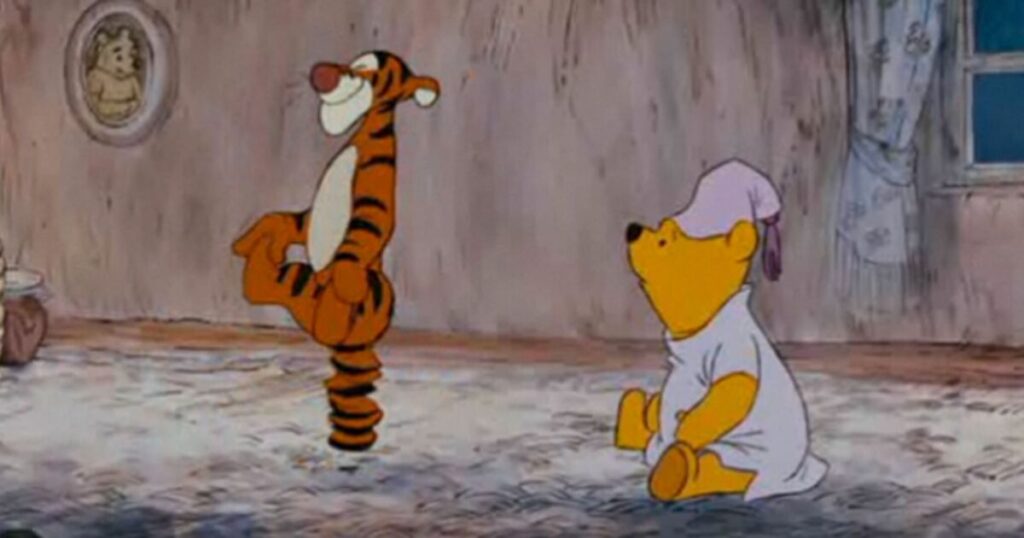

Winnie the Pooh is still a great way to introduce children to reading (Image: Disney)
It’s Winnie the Pooh Day today, and it’s no coincidence that it is also author A. A. Milne’s birthday as well (January 18). In 2026, it’s also the 100-year anniversary of the bear who is ‘short, fat, and proud of that’.
What is the purpose of the day? It’s a day to honour Milne’s incredible legacy, share stories, enjoy honey-themed treats just as Winnie the Pooh would, and to revisit the classic tales of friendship, kindness, and imagination with characters like Pooh, Piglet, Tigger, and Eeyore.
When I was a very young child, I remember my mum and grandma reading Winnie the Pooh to me, and I lapped it up every single time they did. The copy was a little battered because I’d gotten my grubby little mits on it, but I absolutely adored the gentle stories and the pretty pictures each book provided.
I remember the stories making me feel all warm and cosy inside, and celebrating the differences between each of the characters.
While I may not have fully understood the books when I was under two years old, this didn’t stop my overall enjoyment of them – and it wouldn’t for your children either. It’ll probably create fond memories for them when they get older.
READ MORE: ‘I read every day and there are five books I can’t wait for in 2026’
Despite the fact that Winnie the Pooh was brought to life in the 1920s, I think the key themes throughout the book are still so important to share with the next generation, and to revisit ourselves.
The books are a great first wander into the literary world because they teach such valuable lessons in an easy-to-digest way.
They’re not crass like a lot of modern children’s books can be, so you don’t have to panic about the content you’re sharing with them.
They teach that we should be accepting of differences between ourselves and other people. Every single character within the books has a defining quality, and the others are accepting of this.
They all also have their own quirks, much like real people – and we have to accept these.
According to Grade Saver: « One of the primary lessons being taught throughout the collection of stories is to place value on what makes someone different from you. »
In the context of the Hundred Acre Wood, all the animals also work together – even though in real life, some would probably eat the others. It’s to show a level of compassion that we should give to other human beings as a standard.
Grade Saver shares that « the residents of the Wood are dependent upon one another and reveal a new law of the wild: cooperation works better than competition ».
Of course, one of the main themes throughout the books is childhood and imagination. Milne never really attempts to portray these characters are real animals. We know it’s Christopher Robin’s stuffed toy collection, and therefore, they are all of his creation.
But readers are able to suspend their disbelief for long enough to enjoy the tales regardless, even readers who are adults.
