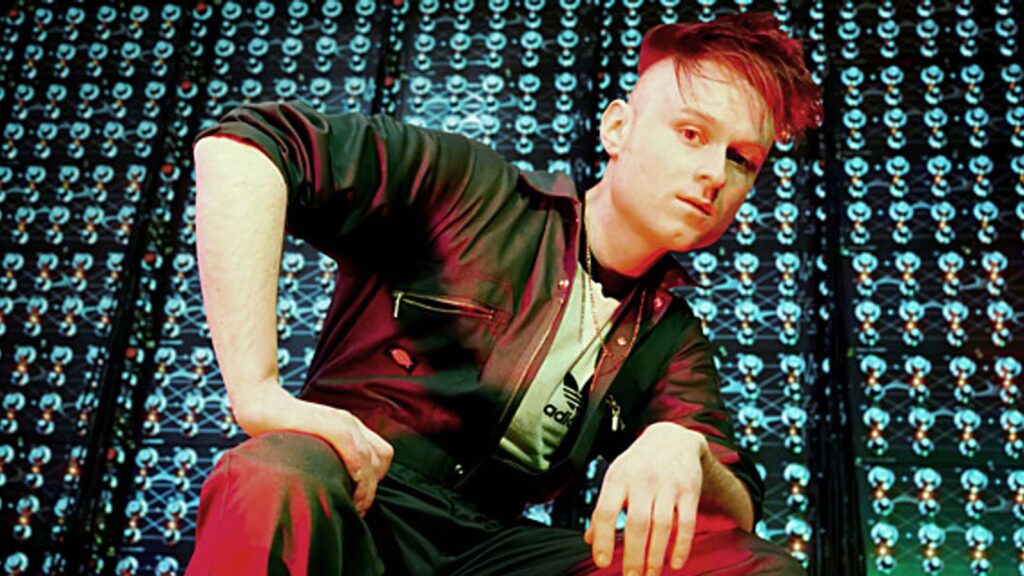
The UK’s entrant for this year’s Eurovision Song Contest will be YouTuber and electronic artist Look Mum No Computer.
Real name Sam Battle, the self-proclaimed “massive Eurovision fan” is a performer and composer who launched his YouTube channel in 2016.
He is known by fans for building and playing unique electronic instruments – such as an organ made from Furbies and Game Boys, flame-throwing keyboards and a Star Wars droid orchestra.
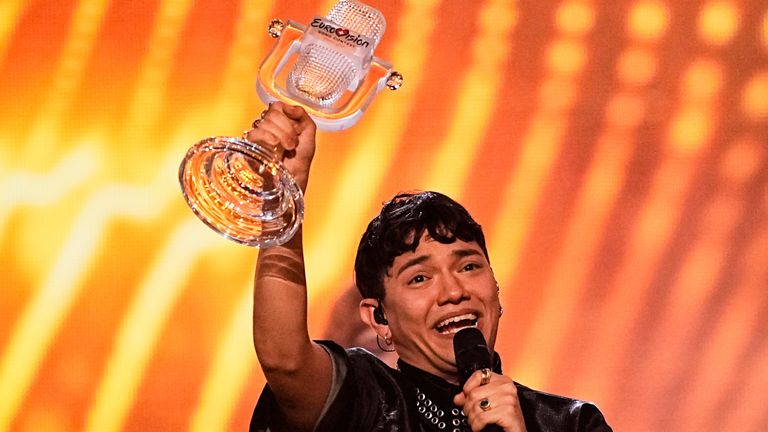
JJ, from Austria, won last year’s contest. Pic: AP
“I hope Eurovision is ready to get synthesised!” Battle said as his entry was revealed. “I find it completely bonkers to be jumping on this wonderful and wild journey.
“I have always been a massive Eurovision fan, and I love the magical joy it brings to millions of people every year, so getting to join that legacy and fly the flag for the UK is an absolute honour that I am taking very seriously.”
This year’s ceremony is due to take place in Vienna, Austria, in May and details of the UK song will be revealed in the coming weeks, the BBC – which broadcasts Eurovision in the UK – said.
“I’ve been working a long-time creating, writing, and producing my own visions from scratch, and documenting my process,” Battle added.
“I will be bringing every ounce of my creativity to my performances, and I can’t wait for everyone to hear and see what we’ve created.”
Kalpna Patel-Knight, head of entertainment at the BBC, said Look Mum No Computer embodies “everything the UK wants to celebrate on the Eurovision stage – creativity, ambition, and a distinctly British wit”.
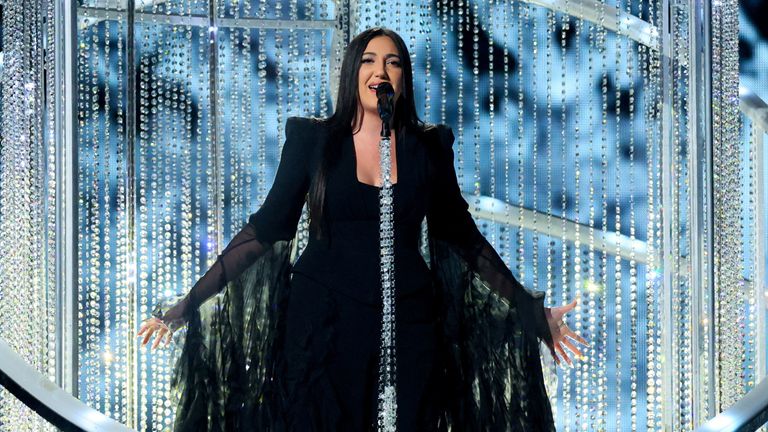
Israel’s 2025 entrant Yuval Raphael. Pic: REUTERS/Denis Balibouse
Which broadcasters have pulled out?
The BBC’s announcement comes amid controversy surrounding this year’s ceremony. Last year, Iceland, the Netherlands, Spain, Ireland and Slovenia all announced their withdrawal from Eurovision 2026 over Israel‘s participation in the competition.
It came after a vote on whether members were happy with tougher new rules introduced in November – following claims of Israeli government “interference” in last year’s contest. The majority agreed the changes were enough and Israel’s place was confirmed.
Israeli national broadcaster KAN described attempts to remove them as a “cultural boycott”.
In response to the decision to allow Israel to compete, the country’s president Isaac Herzog wrote on X: “Israel deserves to be represented on every stage around the world, a cause to which I am fully and actively committed.”
This year’s ceremony marks Eurovision’s 70th anniversary and organisers had planned the first ever official song contest live tour, featuring acts from the past seven decades of the event, to follow the show.
However, it was announced last week that this had been cancelled due to “unforeseen challenges”.
Contest director Martin Green said it had been a “difficult decision” but assured the tour would be relaunched “when we can ensure the world-class experience that our fans expect”.
