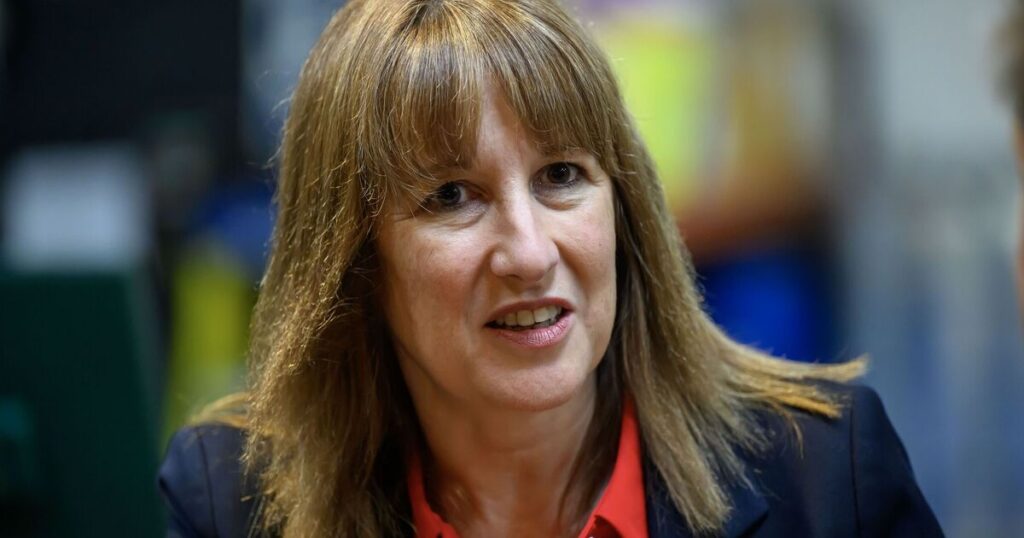

Rachel Reeves is the Chancellor (Image: Getty)
The UK economy grew by just 0.1% between October and December last year, according to the Office for National Statistics (ONS), marking a new blow for Chancellor Rachel Reeves. Alongside the quarterly data, the ONS also released its GDP estimate for December this morning.
The figures show that the economy grew by 0.1% in December compared with the previous month. However, November’s growth figure was revised down, from 0.3% to 0.2%. Meanwhile, constuction contracted -2.1% whilst services showed no growth, however, production grew by 1.2%.

Reeves unveiled £26 billion of tax increases in last year’s Budget (Image: Getty)
Read more: Rachel Reeves makes biggest Brexit betrayal admission yet
Read more: Rachel Reeves’s great Brexit betrayal has begun – she’s duped millions of Leave
In last year’s Budget, Rachel Reeves unveiled £26 billion of tax increases after insisting she would not come back for more after her £40 billion raid last year.
Victoria Scholar, head of investment at Interactive Investor, said the Budget shed a « cloud of uncertainty ».
She said: “It is likely that economic activity picked up after the Budget once that cloud of uncertainty shifted to the rearview mirror in December. »
The fourth quarter as a whole hampered by worries about the budget has seen key indicators point towards an improvement in the key services sector, as consumer spending rises.
*** Ensure our latest news headlines always appear at the top of your Google Search by making us a Preferred Source. Click here to activate or add us as Preferred Source in your Google search settings. ***
Chancellor Reeves said in response to the fourth-quarter GDP figures: “Thanks to the choices we have made, we’ve seen six interest rate cuts since the election, inflation falling faster than predicted and ours is the fastest growing G7 economy in Europe.
“The Government has the right economic plan to build a stronger and more secure economy, cutting the cost of living, cutting the national debt and creating the conditions for growth and investment in every part of the country.”
But Shadow Chancellor Sir Mel Stride branded the GDP figures as “very disappointing ». He told the Press Association: “In fact, if you look at growth per capita, the size of the economy per person, it’s actually shrunk in the last quarter and the quarter before that.
“And that’s because of the Government’s choices, far too high taxes on businesses – that’s killing growth. Borrowing lots of money, spending lots of money, keeping inflation higher than it would otherwise be, with interest rates higher as a consequence.
“All of that is weighing on the economy, and what we really need to see is gripping public spending, particularly welfare, people off benefits and into work, and cutting taxes on business.”
The senior Tory argued that by reducing the welfare bill “you then get the space to be able to bear down on the size of our debt, which is very large, but equally, to get taxes down, particularly on businesses.
“And if you can do that, then you can grow the economy.”
Ms Reeves is under further intense pressure after the Bank of England downgraded its growth forecasts, painting a bleak picture for workers.
The Chancellor, who has insisted economic growth is her top priority, was hit with the grim outlook last week as the central bank held interest rates at 3.75%, but signalled cuts could come soon to ease pressure on households.
In a further blow, the Bank of England said on Thursday last week it believes the economy grew by 1.4% last year, reducing its previous estimate of 1.5%.
It also cut its growth forecast for 2026, from 1.2% to 0.9%, and for 2027, from 1.6% to 1.5%.
