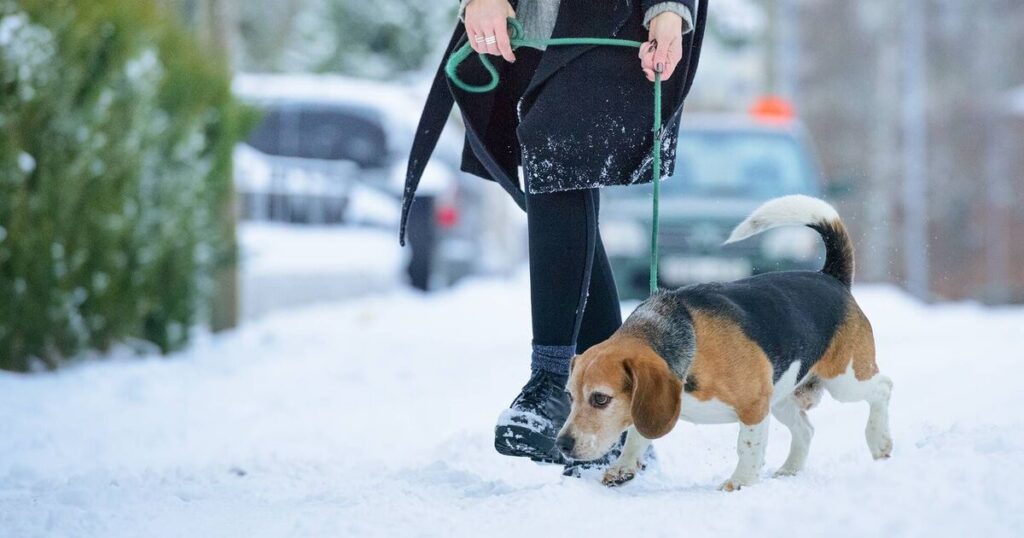
Dogs that find the cold challenging usually have thin coats and prefer to be wrapped in blankets. They might find temperatures as high as 5°C difficult.
If they show signs of discomfort, consider putting them in dog coats, shortening your walks, or even staying indoors.
Small dogs, puppies, elderly dogs and slender breeds may start to struggle when the temperature drops to zero. If your dog falls into this category and the mercury hits zero, it’s advisable to skip the walk.
When temperatures plummet to -4°C or lower, it’s recommended to forgo walks altogether. Such frigid conditions pose health risks to dogs that could be avoided by keeping them indoors.
Excessive exposure to the cold could lead to hypothermia, frostbite and cracked paws, pads or noses in dogs. You can tell if your dog is having difficulty with the cold by observing certain signs.
They might shiver, whine, refuse to move, lift their paws, seek warmth or appear disoriented. If you notice any of these symptoms, you need to get your dog home and warm them up safely.
When it’s chilly but still safe for dogs to venture out, there are measures you can take to keep them warm. It’s suggested that slim and thin-coated dogs wear a jacket.
Encouraging them to run and play can also help, as movement generates body heat. However, if your dog isn’t accustomed to the cold or clearly dislikes it, keep the walks brief until they acclimate.
It’s advisable to schedule dog walks during the warmest parts of the day, typically between 11 am and 3 pm in winter. If you suspect your dog is struggling with the cold and may have hypothermia, take them to the vet immediately.
