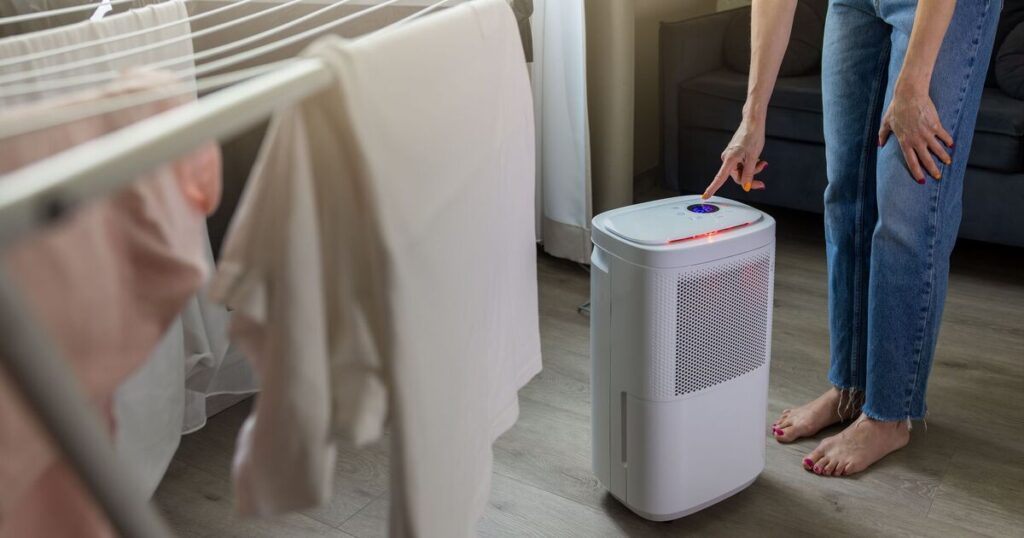
Many homeowners rely on dehumidifiers to safeguard their properties from damp during the colder months. These devices can help combat excess moisture generated by daily household tasks such as preparing meals and air-drying laundry inside.
Dehumidifiers can help homeowners reduce condensation, stale smells, and the potential health risks associated with mould growth in the home. For many households, operating a dehumidifier is a standard winter practice, something they do every year when the temperature drops and snow and ice keep people indoors, cranking up their heating.
However, not all users understand how to operate their dehumidifier effectively. To achieve the best results, the dehumidifier manufacturer Ebac UK suggests moving the unit throughout your home.
In guidance posted online, Ebac UK outlined ’10 rules for using a dehumidifier’, which includes the recommendation to ‘protect your easterly-facing walls’. Ebac explained: “Easterly-facing walls get less sunlight, so they suffer most from condensation. Move your dehumidifier between rooms with easterly-facing walls to fully protect your house from damp and mould.”
The experts added that it’s important to keep the dehumidifier away from any walls. “Dehumidifiers suck in and expel air using vents. Blocking any of these vents can reduce your dehumidifier’s effectiveness.”
Homeowners are advised to keep internal doors ajar while using their dehumidifiers, reports the Mirror. Ebac explained: “While your dehumidifier’s on, keep your doors ajar. Dehumidifiers can’t attract the moist air with the doors closed! Opening your doors slightly allows sufficient airflow so your dehumidifier can do its job.”
According to Ebac, it’s also important to set the right humidity, empty the container regularly, keep the dehumidifier clean, and follow the safety precautions included with your gadget. Ebac advises that ‘prevention is better than cure’ when it comes to problems like mould and damp, and recommends using a dehumidifier whenever you air-dry laundry inside your home.
In 2014, research from the University of Manchester found that drying clothes on frames or draped over warm radiators can raise moisture levels in our homes by up to 30 per cent. In some cases, this could create ideal breeding conditions for mould spores, including Aspergillus fumigatus, which can cause potentially fatal lung infections.
Dr Denning, Professor of Infectious Disease in Global Health at The University of Manchester, said: It’s estimated that as many as 87 per cent of us dry our clothes indoors in the winter. One load of wet washing contains almost two litres of water, which is released into the room.”
He said most people are immune to the fungus or have a sufficiently healthy system to fight the infection. However, people with weak or damaged immune systems could face an increased risk.
Dr Denning added: “My advice would be when in doubt, dry wet washing outside, in a tumble dryer or in a well-ventilated indoor space away from bedrooms and living areas. Be safe rather than sorry.”
