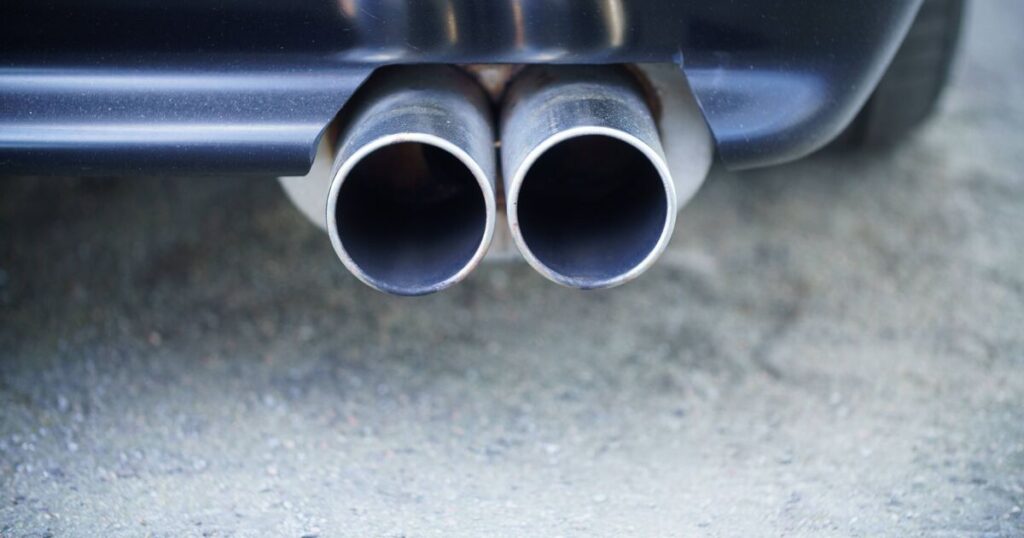

Car taxes are going up in April and the emissions a vehicle produces are one key factor (Image: Getty Images)
The Treasury has issued an update detailing significant changes to Vehicle Excise Duty (VED) set to take effect from April 2026. Petrol and diesel car owners face increases this year, with the most polluting vehicles facing a first-year charge expected to reach £5,690 from 1st April.
The hike follows sweeping changes to Vehicle Excise Duty (VED) rates introduced last year, which saw some models hit with an eye-watering £2,745 increase. Popular marques including Ford and Toyota will see selected models affected, whilst premium brands such as BMW, Mercedes and Audi will also feel the impact.
Vehicles emitting more than 225g of CO2 per kilometre fall under Vehicle Excise Duty (VED) charges, with those producing 201-225g/km paying £430, 226-255g/km £735 and over 255g/km £750.
These bands are scheduled to rise, with the £735 bracket climbing to £760 and the over 255g/km category expected to reach £790 from April 2026.
In a fresh development, Labour MP Neil Duncan-Jordan has questioned how emissions are determined, suggesting that rather than relying on manufacturers’ claims, calculations should be based on actual MOT test results. He challenged Chancellor Rachel Reeves: « Whether the planned increase in vehicle tax from April 2026 will be based on (a) emissions from vehicles based on factory information when new and (b) MOT results annually. »
In response, Exchequer Secretary Dan Tomlinson stated: « Vehicle Excise Duty (VED), sometimes known as ‘road tax’ or ‘vehicle tax’, is a tax on vehicles used or kept on public roads. Different rates apply to cars, vans, and motorcycles, and the rate for each vehicle is calculated according to a range of factors, such as its date of first registration, weight, or CO2 emissions.
« As announced by the government at Budget, from 1 April 2026, VED rates for cars, vans, motorcycles and heavy goods vehicles (HGVs) will be uprated in line with the Retail Price Index (RPI) in 2026-27. »
Independent MP James McMurdock also queried the Chancellor, asking: « Whether she plans to review the structure of Vehicle Excise Duty. »
Mr Tomlinson responded: « Vehicle Excise Duty (VED), sometimes known as ‘road tax’ or ‘car tax’, is a tax on vehicles used or kept on public roads. Different rates apply to cars, vans, and motorcycles, and the rate for each vehicle is calculated according to a range of factors, such as its date of first registration, weight, or CO2 emissions. The government has no current plans to review this structure.
« At Autumn Budget 2025, the government announced the introduction of Electric Vehicle Excise Duty (eVED), a new mileage charge for electric and plug-in hybrid cars, which will come into effect from April 2028. Drivers will pay for their mileage alongside their existing Vehicle Excise Duty (VED). »
The Government has decided to significantly increase the first-year Vehicle Excise Duty (VED) charges for petrol and diesel vehicles from April 2025. These are hefty fees paid by buyers of brand-new cars before they transition to the standard rate.
Charges have risen on a sliding scale, with most higher bands seeing fees that double from their 2024 levels. Vehicles emitting over 255 g/km of CO2 faced the steepest rise of £2,745, affecting some of the most commonly driven cars on Britain’s roads.
They increased to £5490 for the first year – and this is expected to rise to £5,690 from 1st April 2026.
Mainstream manufacturers such as Ford and Toyota will see certain models affected. BMW, Mercedes and Audi vehicles will also be impacted.
Premium brands will bear the brunt of the changes. Models from Porsche, Lotus, Lamborghini and McLaren are among those set to face the new levy.
Chancellor Rachel Reeves announced the measure to encourage consumers to purchase electric vehicles and widen the gap between ‘higher polluting’ cars and EVs.
The first-year tax figure is determined by the amount of carbon dioxide the vehicle emits. Currently, those choosing electric vehicles (EVs) benefit as EVs are exempt from Vehicle Excise Duty (VED), while cars emitting between 111g and 150g/km of CO2 faced a £220 charge.
Vehicles emitting over 255g/km face a hefty first-year fee of £5,490 – a figure set to increase further. Last April’s changes saw EV owners paying a nominal £10 for their first year’s VED-a rate that has recently been frozen.
The anticipated first-year car tax rates from 1 April 2026 are as follows:
- 0g/km – Remains at £10.
- 1-50g/km – Rising from £110 to £115.
- 51-75g/km – Rising from £130 to £135.
- 76-90g/km – Rising from £270 to £280.
- 91-100g/km – Rising from £350 to £365.
- 101-110g/km – Rising from £390 to £405.
- 111-130g/km – Rising from £440 to £455.
- 131-150g/km – Rising from £540 to £560.
- 151-170g/km – Rising from £1,360 to £1,410.
- 171-190g/km – Rising from £2,190 to £2,270.
- 191-225g/km – Rising from £3,300 to £3,420.
- 226-255g/km – Rising from £4,680 to £4,850.
- Over 255gkm – Rising from £5,490 to £5,690.
- After the first year, the standard rate is expected to be £200 (currently £195).
A full list of new models emitting over 255 g/km has been released.
- Audi RS6 4.0 TFSI V8
- Audi S8 4.0 TFSI V8
- McLaren GT 4.0T V8
- Audi R8 5.2 FSI V10
- Lamborghini Huracan 5.2 V10
- Chevrolet Corvette Stingray 6.2 V8
- Volkswagen Amarok 3.0 TDI
- Aston Martin DBX 4.0 V8
- Ferrari Roma 3.8T V8
- Audi SQ7 4.0 TFSI V8
- Range Rover Sport 4.4P V8
- Jaguar F-Pace 5.0 P575 V8
- Aston Martin DB12 4.0 V8
- Porsche 911 3.7T 992 Turbo
- Jeep Wrangler 2.0 GME
- Ford Ranger 2.0 TD EcoBlue
- Audi RSQ8 4.0 TFSI V8
- Lotus Emira 3.5 V6
- Bentley Continental 4.0 V8
- Audi SQ8 4.0 TFSI V8
- Aston Martin Vantage 4.0 V8
- Toyota Hilux 2.8D
- Porsche Macan 2.9T V6
- Mercedes-Benz SL55
- Range Rover 4.4 P530 V8
- Mercedes-Benz AMG GT 4.0 V8
- Porsche 718 Cayman 4.0 GT4
- Lamborghini Urus 4.0 V8 BiTurbo
- Audi RS7 4.0 TFSI V8
- Ford Mustang 5.0 V8
- Toyota Land Cruiser 2.8D
- Bentley Continental 6.0 W12
- Mercedes-Benz GLC63
- Ford Ranger 3.0 V6
- INEOS Grenadier 3.0P
- Range Rover 4.4 P615 V8
- Land Rover Defender 90 5.0 P425 V8
- Rolls-Royce Ghost 6.75 V12
- Ford Ranger 3.0 EcoBlue
- Mercedes-Benz G63
- Ferrari Purosangue 6.5 V12
- Rolls-Royce Cullinan 6.75 V12
- Alfa Romeo Stelvio 2.9 V6 Bi-Turbo
- Mercedes-Benz GLE63
- Maserati Levante 3.0 V6
- Porsche Cayenne 4.0T V8
- BMW M8 4.4 V8
- Maserati MC20 3.0 V6
- Land Rover Defender 110 5.0 P425 V8
- Mercedes-Benz G400D
- Lamborghini Revuelto 6.5 V12
- Bentley Bentayga 4.0 V8
- BMW X7 M 4.4 V8
- BMW X6 M 4.4 V8
- BMW Alpina XB7 4.4 V8
- Bentley Flying Spur 4.0 V8
- Maserati Levante 3.8 V8
- BMW X5 M 4.4 V8
- Mercedes-Benz GLS63h
Cars costing more than £40,000 attract VED luxury car tax surcharge
Vehicles that cost more than £40,000 when new (including options) incur an extra annual charge of £425 (increasing from £410) on top of the standard annual VED car tax rates, from their first through sixth birthdays.
Cars that cost more than £40,000 new (including options) incur an extra charge of £425 for five years, starting when the car is taxed for the second time. This means you’re out of pocket to the tune of £2,125 in extra tax by the time the car turns six.
From 1 April 2026, the threshold for the « luxury car tax » (£425 surcharge) for EVs will increase to £50,000, while remaining at £40,000 for petrol/diesel cars.
If you’re driving a modern classic or just a reliable older runaround registered before March 2001, your tax is based on VED engine size categories rather than CO2 emissions.
