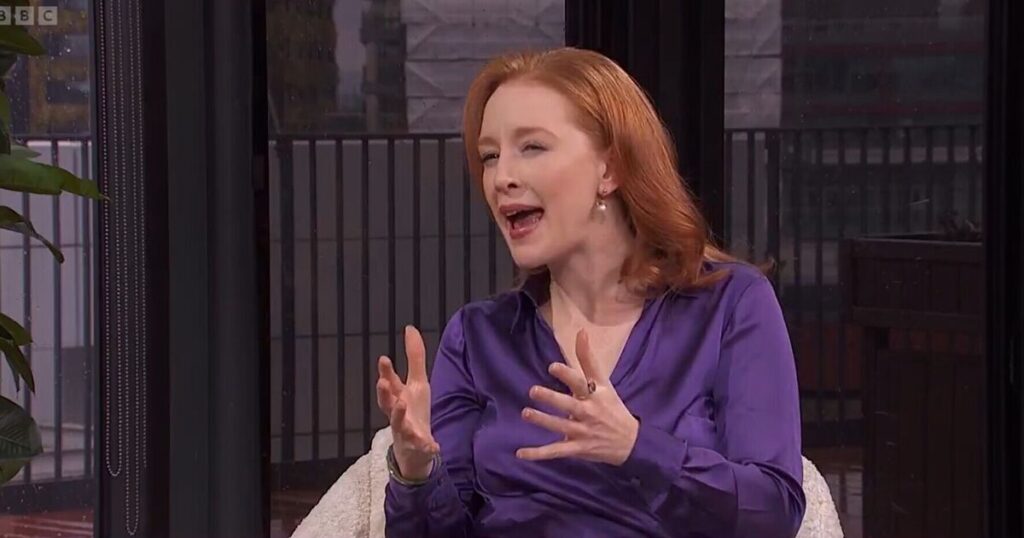

Iona Bain said people need to be wary of savings going too high (Image: BBC)
A BBC expert has given a warning to a group of taxpayers – and that just £12,500 in savings could mean being hit with a tax bill. Appearing on BBC Morning Live finance expert Iona Bain told hosts Louise Minchin and Gethin Jones about how savers need to be savvy about how much they’ve got in their accounts – and when they can end up paying a lot more tax.
In one instance she explained how people on the higher rate of tax might fall foul of a rule which meant they could only earn £500 interest before paying. This means a relatively modest £12,500 could bust the limit and mean a letter from HMRC.
She said the Personal Savings Allowance, applies to all savings accounts that are not ISAs. She explained that people who are basic rate taxpayers – paying 20% income tax on earnings between £12,571 and £50,270, after their £12,570 Personal Allowance can earn up to £1,000 in interest without having to pay tax every year.
Higher rate taxpayers in the UK pay 40% tax on income between £50,271 and £125,140, and Ms Bain said they can earn £500 in interest before having to pay tax on it. She said that if people move their savings to an ISA they could miss out because of the potentially lower interest rates.
Ms Bain said: “What this means is if you are a basic rate taxpayer and you’re not saving a huge amount every year, then you may not be paying any tax on the interest you’re earning from your savings anyway at the moment. So you may not necessarily want to rush out and move all your savings into an ISA. And in some cases, if you do that, you might actually miss out because Cash ISA rates are not always the best interest rates on the market. You may find actually you can earn a better interest rate outside of an ISA.
“So that’s why it’s really important to work out whether you would have to pay a tax on the interest that you earn from your savings because that’s going to, you know, really determine whether it’s worth making that change.”
However people who have more savings may get a benefit to an ISA and gave an example for anyone with £25,000. She said: “Let’s say you’ve managed to build up £25,000 in your savings account over a few years. Now, if that savings account pays you an interest rate of 4%, then you’re starting to bust your Personal Savings Allowance, and from that point onward, if you continue to save into that account, you’d pay tax on your interest.
“And that’s when you’d really want that money to be in an ISA instead because that interest would then be shielded from tax. And if you’re a higher rate taxpayer, of course, that’s only £12,500 that you’d need to have in your savings account before you’re busting your Personal Savings Allowance, because that’s £500 if you’re a higher rate taxpayer.
“So that’s why you need to do the sums and work out if it’s worthwhile for you. But certainly, if you think you might be in that situation, that’s why you need to be thinking about making the most of that full Cash ISA allowance of £20,000 this tax year and in the next tax year.”
?????? ISAs are a popular way to save but changes are coming that could cut the tax-free allowance from £20,000 to £12,000.
Finance expert Iona Bain explains what this means and rounds up the best ISA deals available right now.
Watch ?????? https://t.co/wtHyyA4jkD pic.twitter.com/gMk4NmjaHD
— BBC Morning Live (@BBCMorningLive) January 27, 2026
She added that for some people having an ISA might not the best option as the interest rates aren’t the best. On the difference between the fixed ISA and the easy-access ISA Ms Bain said: “The big difference that you need to bear in mind, and there’s always a trade-off here between flexibility and certainty so if you go for easy-access, you’re getting flexibility. You can grab that cash whenever you need to and that’s particularly good if you think you’re going to need it in the short term or you might need it for an emergency.
“The downside is that the rates could go down at any time, so you haven’t got that certainty of getting, you know, a guaranteed interest rate. With a fixed-rate ISA, as the name suggests, you are getting a fixed rate for a period of time; therefore, you’re definitely going to be getting, you know, that interest. But you can’t access the money in that period, and that could be quite frustrating, especially if you do need that money.“
