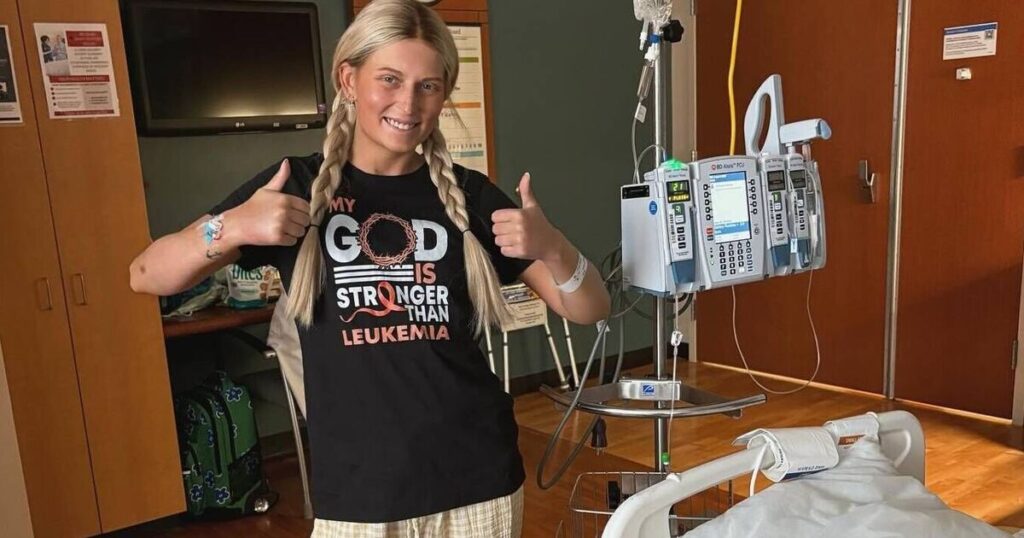

TikTok star Mackenzie Paul shared first warning sign of cancer before losing battle at 26 (Image: Instagram/ @kenziepaul3)
Mackenzie Paul has tragically passed away aged 26. The influencer, who became known for detailing her cancer battle on TikTok, gained widespread attention in 2023 after revealing her diagnosis with acute myeloid leukaemia.
Her husband announced the heartbreaking news in an emotional Facebook video, describing himself as « blessed » to have wed « the best woman out there, » adding « it was a miracle that she made it this far ».
Whilst supporters have offered their condolences to Mackenzie’s family, many have also been motivated to learn about cancer’s warning signs. One particularly significant video that deserves remembering was shared by MacKenzie in 2023.
In the footage posted three years ago, she outlined the initial symptoms she experienced and encouraged others to get medical help if they encountered similar signs.
« Everyone’s diagnosis is different. But one thing remains the same. Listening to your body is key, » the video’s caption reads.
READ MORE: ‘Underrated’ historical film starring Adolescence favourite is on Amazon Prime
Seven weeks before her diagnosis, Mackenzie began the opening week of her second year at medical school – a period guaranteed to be intense for any student.
She explained: « So in the first week of medical school, I had a clinical rotation where I was following a nurse around, and we ended up in a patient’s room, and nothing was happening, the nurse was just talking to the patient.
« But I was just standing in one spot for a really long period of time, and I ended up getting really dizzy. So I ended up passing out, which was really, really embarrassing, and I thought maybe it was just a fluke; maybe I was nervous, maybe I didn’t eat enough, drink enough, sleep enough. It was weird. »
Mackenzie initially « brushed that [incident] off. » Yet the subsequent week, whilst on another clinical rotation, she found herself standing stationary for an extended period and « felt really dizzy, » though this time managed to avoid fainting.

The TikTok star shared the symptom she had (Image: Instagram/ @kenziepaul3)
This occurrence left Mackenzie concerned, prompting her to contact her GP, who arranged « some labs and a Holter monitor ». Upon reviewing her blood test findings, she described them as « horrifying ».
She explained: « I had low red blood cells, white blood cells, platelets, low haemoglobin, low hematocrit, like, it was a mess. I remember thinking at that point, like, god, please don’t let this be cancer. »
Whilst medical professionals initially suspected a viral infection, subsequent examinations revealed that Mackenzie had developed leukaemia.
She remembered: « Other than the passing out, I didn’t really have any other symptoms, like I didn’t get sick, I didn’t have fevers, I was feeling a little more tired than usual, but, I mean, I was also a med student and everyone in medical school is tired, so, I don’t know, it’s just weird how it all happened. »
After identifying tiredness as the primary indicator of her condition, Mackenzie encouraged others to monitor their health carefully. She stressed: « The moral of the story is that if something feels off or weird, or you have a gut feeling about your health, just get it checked out. »
What does the NHS say about acute myeloid leukaemia?
The NHS website outlines the symptoms of acute myeloid leukaemia (AML), with the exhaustion Mackenzie experienced amongst them.
Warning signs typically emerge over several weeks, worsening as immature white blood cells multiply.
Symptoms of AML can include:
- skin looking pale or « washed out »
- tiredness
- breathlessness
- losing weight without trying
- frequent infections
- having a high temperature, or feeling hot, cold or shivery
- night sweats
- unusual and frequent bleeding, such as bleeding gums or nosebleeds
- easily bruised skin
- flat red or purple spots on the skin
- bone and joint pain
- a feeling of fullness or discomfort in your tummy
- swollen glands in your neck, armpit or groin that may be sore when you touch them
Consult a GP if you or your child displays the symptoms of AML. Whilst it’s extremely unlikely that AML is responsible, these symptoms require prompt investigation and treatment.
